con·tact
minorcinema@yahoo.com
Francisco Romero is an independent filmmaker and multidisciplinary artist based in Los Angeles, California. Raised in the working-class neighborhoods of Pico-Union and South Gate, Romero draws from personal experience to explore memory, identity, place, and the social histories embedded in everyday life. His work moves between experimental and narrative forms, often engaging with community, cultural history, and the porous boundaries between fiction and documentary.
He holds a BFA in Film and Electronic Media from California State University, Long Beach (CSULB), and an MFA in Film and Video Production from the California Institute of the Arts (CalArts). Romero continues to develop an independent filmmaking and artistic practice alongside his work in education.
SELECT SCREENINGS & EXHIBITIONS:
Museum of Contemporary Art (MOCA), Los Angeles, CA; The Museum of Modern Art (MoMA), New York, NY; Los Angeles Filmforum, Los Angeles, CA; Avenue 50 Studio, Highland Park, CA; Barnsdall Art Park Foundation, Los Angeles, CA; pain sugar gallery, Riverside, CA; Espiral Film & Video Collective, Los Angeles, CA; ARTSPACE HP, Huntington Park, CA; La Cueva, Mexico City, Mexico; National Autonomous University of Mexico (UNAM), Mexico City, Mexico; and Cinema Antena, San Agustín Etla, Oaxaca, Mexico.
notas de la América Mexicana
2025 | USA | Various Formats | Color & Black and White | Sound
Notes from Mexican America is an ongoing collection of film essays, moving image fragments, archival material, and personal reflections examining America through a Mexican American lens. Moving freely between memoir, history, criticism, and cinematic collage, each entry begins with a single image, place, memory, or encounter before expanding into larger questions of labor, migration, race, belonging, and historical memory.
Notes from Mexican America does not have a single thesis. It accumulates. Each essay or entry changes the meaning of the previous one.
Entry 1 – The Unwanted Americans & Our Anger, Unresolved
A personal account of growing up in Los Angeles from the 1970s to the present, tracing the enduring presence of anti-Mexican and anti–Mexican American rhetoric. Blending memoir, local history, archival material, and political reflection, the film examines America's recurring cycles of exclusion while confronting the unresolved anger left in their wake.
frag·ment
2020 | USA | Digital | Color | 17:46 min.
A quiet, interwoven drama about two couples whose lives blur across the lines of class and labor — Gabino and Claudia, cook, clean, and fix for their employers, Tara and John — revealing the intimacies, tensions, and unspoken dependencies that bind them together. Their relationship lays bare the legacies of racism, colonialism, and the quiet violences that persist in the everyday.
Featuring: Jasmine Contreras, Juan Mares, Andrea Monte Warren, Eli Lee
2020
2018 | USA | Digital | Color | Sound | 28:18 min.
Set over the course of a single day on the outskirts of Los Angeles, 2020 follows Oscar, a father living in a homeless encampment as he scrapes together what he can in hopes of reuniting with his young daughter. Collecting recyclables, finding a few hours of temporary work, and searching for a small gift to leave at her doorstep, Oscar moves through the overlooked landscapes of the city with quiet determination, his routines revealing both the fragility and resilience of everyday life.
Conceived and completed in 2018, before the year in its title acquired its later historical resonance, 2020 emerged from a period of growing uncertainty. Inspired by the rapidly expanding homelessness crisis in Los Angeles, reflections on fatherhood, and observations gathered while traveling throughout Mexico, the film reflects on a mounting sense that the certainties many Americans had long taken for granted were beginning to erode. Rather than anticipating a particular event, 2020 captures the emotional atmosphere of a society standing on uncertain ground, as familiar assumptions about security, prosperity, and the future began to feel increasingly fragile.
At its center, 2020 is less a portrait of homelessness than an exploration of fatherhood, dignity, and endurance. Through Oscar's desire to build a better future for his daughter, the film reflects on the quiet acts of labor, care, and sacrifice that persist even as familiar notions of security begin to erode.
Featuring Eli Lee and Matthew Clair.
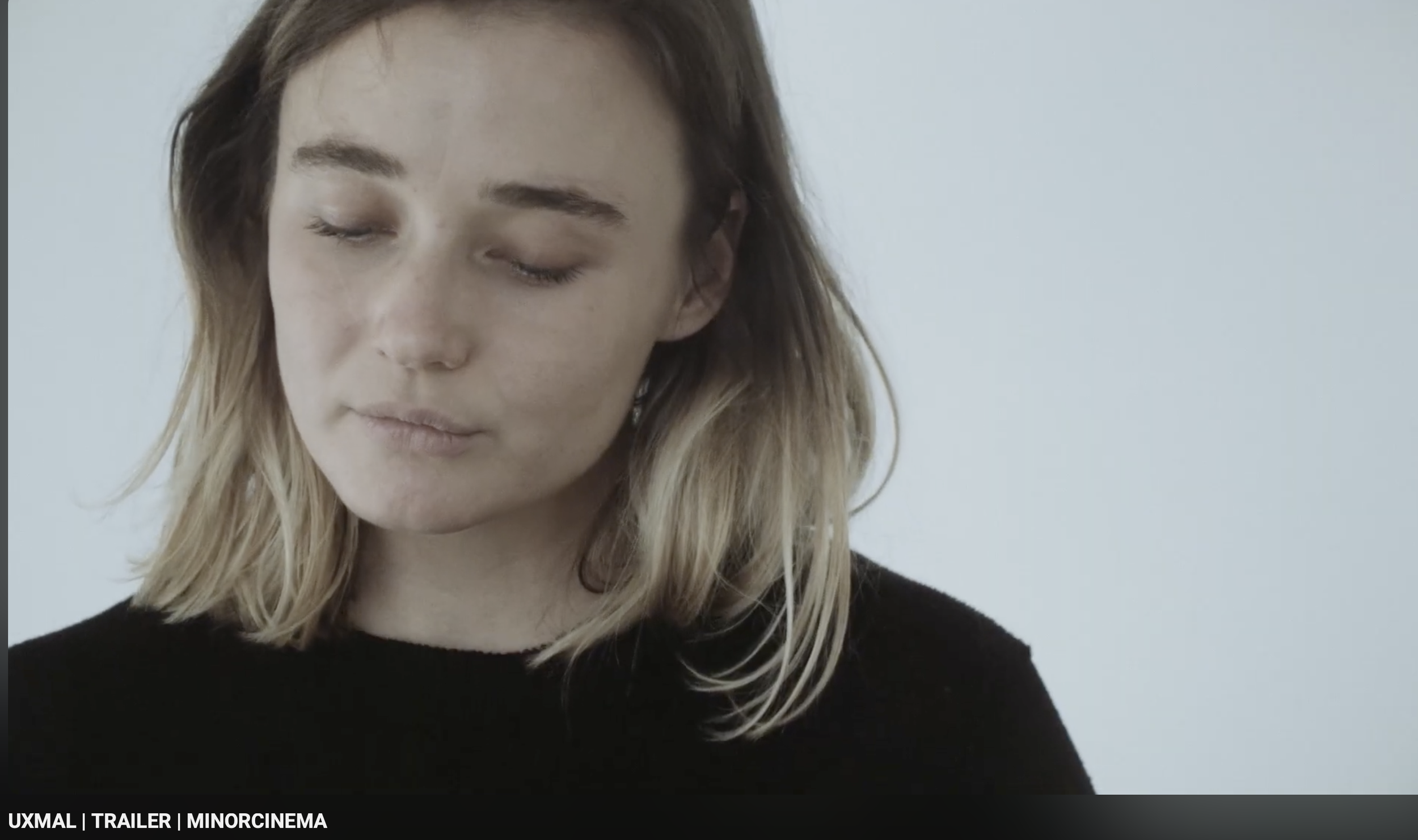
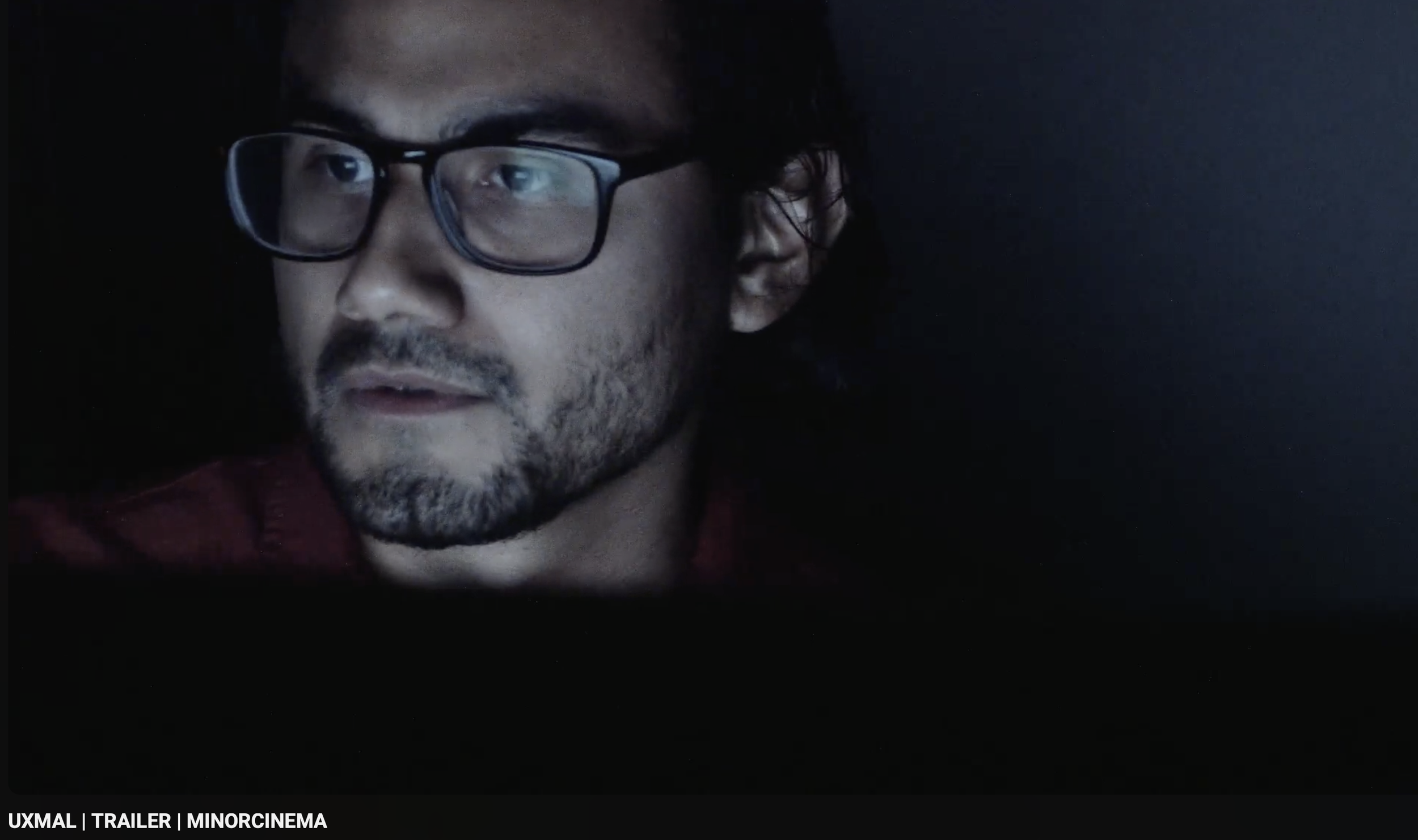
UXMAL
2017 | USA | Digital | Color | Sound | 38:46 min.
Jesse and Cleo meet as strangers on an adult website, their connection formed within the anonymity and ritual of a digital encounter. What begins as a transactional exchange gradually develops into an intimate, if uncertain, relationship sustained through messages, routine, and the quiet accumulation of shared time. Then, without warning, Cleo disappears. Her profile is deleted, no explanation is offered, and Jesse is left searching for someone he realizes he never truly knew.
Blurring the boundaries between essay film and narrative cinema, Uxmal explores the archaeology of contemporary life, where digital traces replace physical artifacts and abandoned profiles, corrupted files, forgotten passwords, and archived conversations become the ruins of the twenty-first century. Drawing connections between ancient cities buried beneath successive civilizations and the invisible architectures of the internet, the film considers memory not as something preserved, but compressed beneath newer layers of experience.
Influenced by existential philosophy and the idea that meaning is not discovered but created, Uxmal examines how human beings invest places, objects, rituals, and relationships with significance despite their impermanence. As Jesse struggles to reconcile the disappearance of someone whose absence cannot easily be justified, the film meditates on loneliness, digital intimacy, emotional exhaustion, and the fragile structures through which we attempt to resist forgetting.
Like the ancient Maya city from which it takes its title, Uxmal suggests that nothing truly disappears. Cities become ruins. Code becomes obsolete. Relationships dissolve into memory. What survives are fragments, remnants waiting to be interpreted by those who come after.
Featuring: Andrea Monte Warren & Joey Puerto.
City of Quartz
2015 | USA | Digital | Color | Sound | 38:46 min.
City of Quartz follows Jesse as he begins his freshman year of college. Yet, despite this new chapter, life feels strangely unchanged—he still lives at home, commutes to campus, and spends time with his old high school friends.
Set in 1992, in the immediate aftermath of the Los Angeles riots, City of Quartz offers a distinct take on the coming-of-age story, exploring what it means to grow up when everything around you feels stuck in place.
Featuring: Joey Puerto, Magaly Castallenos, Sandy Martinez, Oscar Basulto, Melody Parra & Dianne Ruiz
Always Now
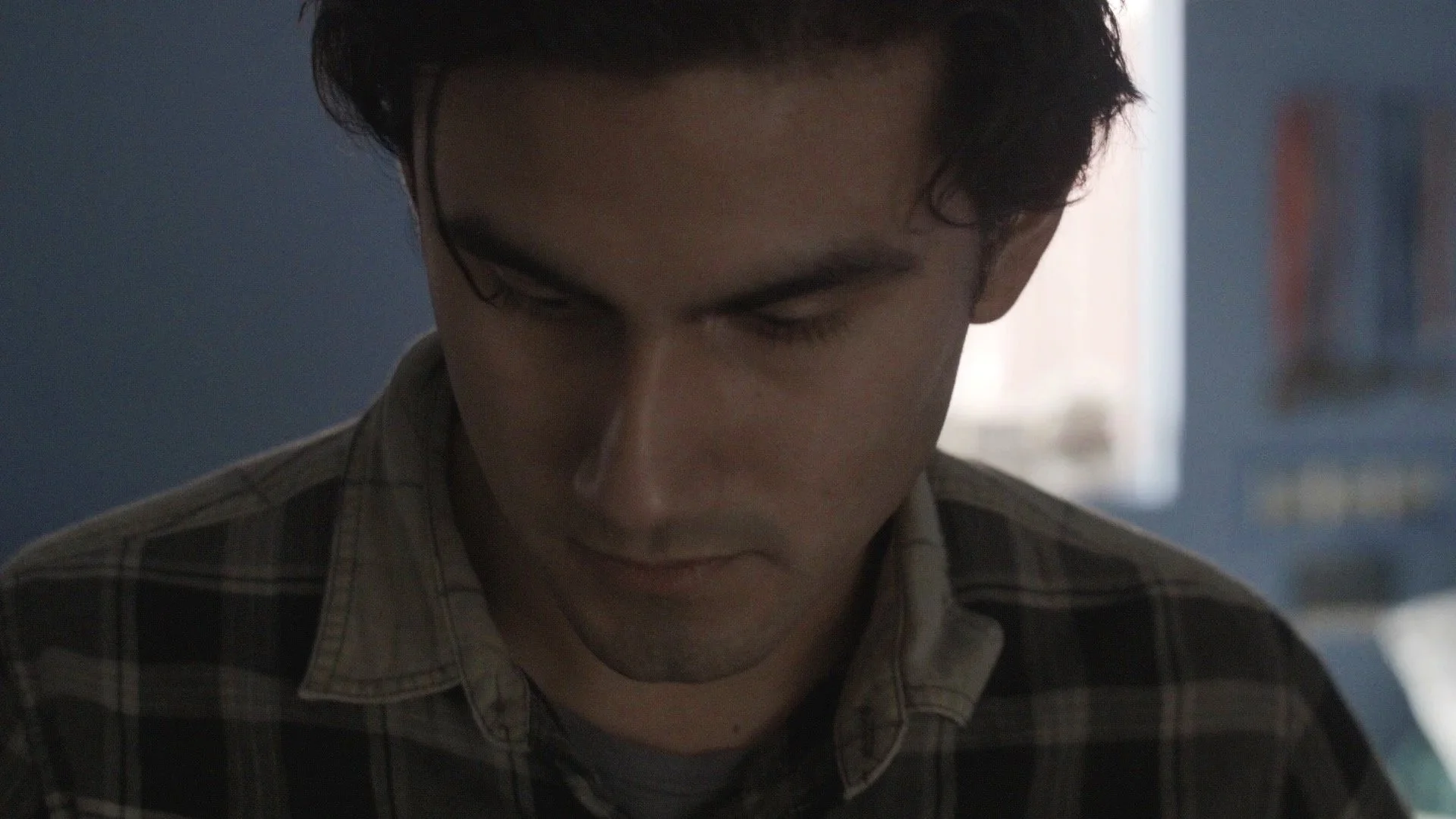
2008| USA | Digital | Color | Sound | 38:46 min.
Rodrigo’s life drifts through fluorescent days and muted nights—an office drone numbed by routine and the humdrum loops of domestic life. That monotony is shattered by a mysterious pirate radio broadcast from the city’s edge. The voice belongs to Ulises Fregoso—anarchist, revolutionary, artist, poet, myth, prophet, and full-time troublemaker.
His call to action sends Rodrigo stumbling into a labyrinth of absurd encounters, half-baked revolutions, and fleeting glimpses of freedom. Blending absurdist comedy with political fable, the film reimagines the revolutionary dream for the fractured landscapes of the 21st century.
Featuring: Lenin Pacas, Dani Piro, Melbourne Delaney.
Untitled Film
2006 | USA | Video | Color | Sound | 38:46 min.
A film exploring the quiet unraveling of a young couple. As Ron struggles with the fundamentals of daily life, Vanessa carries the weight of holding them both together.
Featuring: Ron Trejo
Una Esquina Del Mundo
Una Esquina Del Mundo
2004 | USA | 16mm Film | B&W | Sound | 40 min.
Una Esquina Del Mundo is an experimental hybrid film that interweaves fiction, autobiography, and essay to explore the lives that shape one another across generations. Set largely in the working-class neighborhoods of Southeast Los Angeles, the film follows Rudy, an aspiring writer who spends his days changing oil at a small independent auto repair shop. Uncertain of both his artistic ambitions and his place in the world, he drifts between work, friendships, parties, and moments of impulsive violence, searching for a future he cannot yet imagine. His friendship with Myra, a young artist preparing to leave for art school, offers a quiet counterpoint. Fearless and self-assured, she recognizes possibilities in Rudy long before he is able to see them himself.
Running alongside Rudy's story is a second narrative spoken by the filmmaker rather than the protagonist. These autobiographical reflections recount the migration of his parents from rural Mexico to Los Angeles, revealing the unseen histories that make Rudy's life possible. The filmmaker's mother was forced to leave school after the sixth grade when her father refused to let her travel to a neighboring town for an education. Later, she was denied the opportunity to attend secretarial school in Culiacán for the same reason. Only through marriage was she permitted to leave for the United States. Immigration brought hardship and uncertainty, but it also became the place where she gradually claimed the independence she had long been denied. She learned English, managed the family's finances, guided many of its defining decisions, and emerged as the quiet center of a household shaped as much by her determination as by her sacrifices.
Her story unfolds alongside that of the filmmaker's father, who, after the death of his own father, was separated from his mother for more than a decade when an uncle kept him to work the family fields. These parallel histories are never illustrated directly, but echo beneath Rudy's everyday experiences, revealing how the ordinary freedoms of one generation often rest upon the unseen struggles of another.
Constructed through fragments rather than a conventional narrative, Una Esquina Del Mundo moves fluidly between observation, staged scenes, memory, and personal testimony. What begins in one corner of Southeast Los Angeles gradually opens onto another in rural Mexico, where intimate family histories quietly intersect with broader questions of migration, labor, education, gender, and artistic becoming. The film discovers that even the smallest corner of the world contains generations of lives, each carrying the weight of the places and people that came before.
Una Esquina Del Mundo is the first chapter of the cinematic language the filmmaker has been refining for more than twenty years. It contains many of the ideas that continue to define his work: parallel narratives, autobiography without self-centeredness, family history as social history, Los Angeles as lived geography, and the conviction that ordinary lives can carry extraordinary historical weight.
Huntington Park Christmas Parade
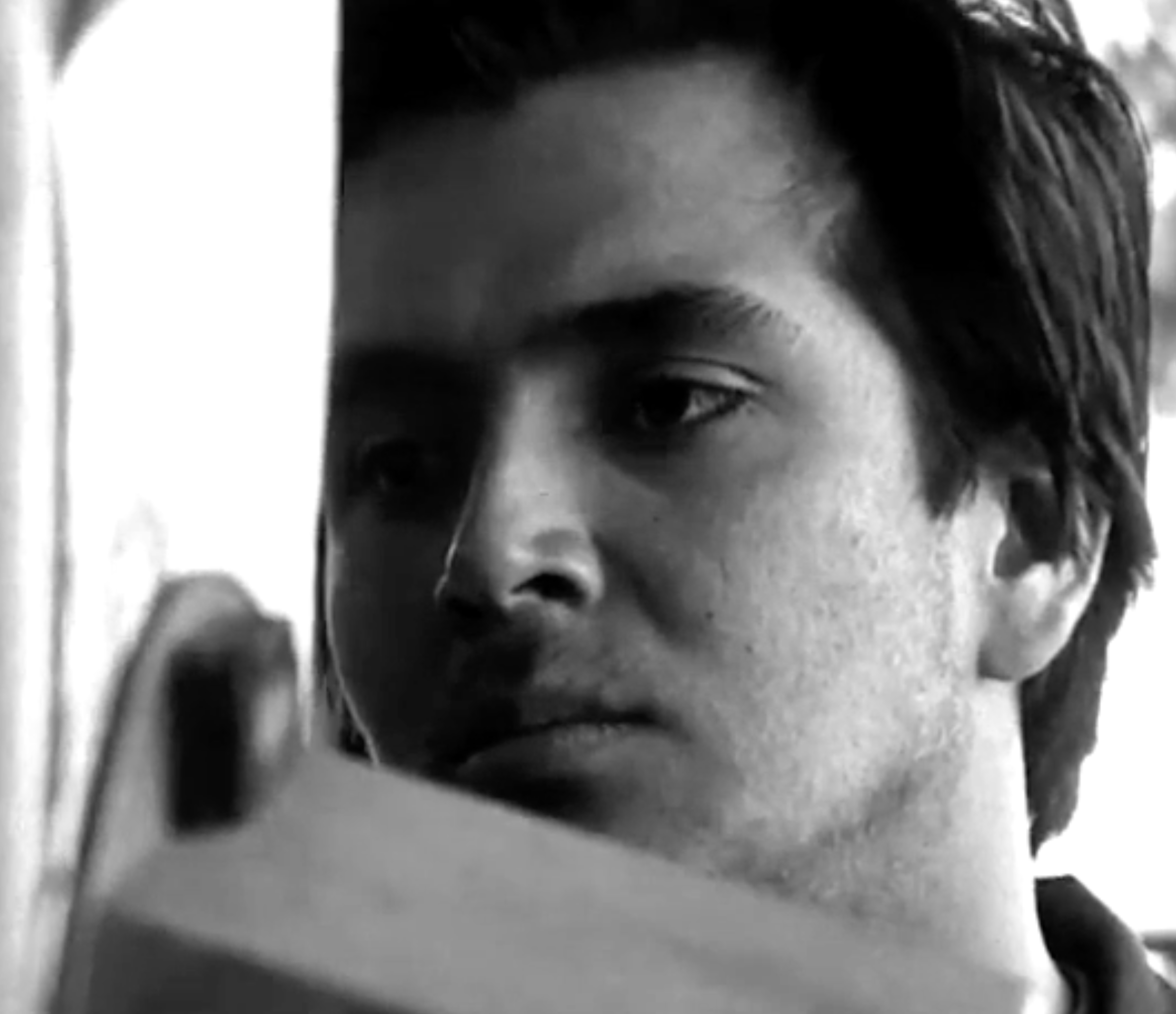
2004 | USA | Video | B&W | Sound | 18:39 min.
Huntington Park Christmas Parade is a video portrait of the annual Christmas Parade in Huntington Park, California, documenting the rhythms, faces, and gestures of a longstanding community tradition. Rather than focusing on a single narrative or participant, the film observes the event as a shared social space where performers, spectators, families, merchants, civic organizations, and local institutions briefly occupy the same streets.
Moving between wide views of the procession and intimate studies of individuals gathered along the parade route, the camera records marching bands, dance groups, classic cars, beauty queens, elected officials, children, veterans, and neighborhood residents. Equal attention is given to the spectacle itself and to the quieter moments that surround it: people waiting, watching, talking, resting, and looking back toward the camera. The parade becomes less a performance than an occasion for the community to observe itself.
Working in an observational mode shaped by Direct Cinema and Cinéma Vérité, the film avoids interviews, narration, and explanatory commentary. Instead, it relies on duration, framing, and patient observation to reveal the subtle choreography of public life. Its photographic sensibility draws upon Walker Evans and Robert Frank, lingering with quiet attentiveness as moments unfold naturally before the lens. Images accumulate rather than announce themselves, gradually constructing meaning through repetition, gesture, and proximity.
Shot entirely in black and white, the film abstracts the visual spectacle of holiday celebration, redirecting attention toward faces, expressions, movement, and social relationships. The absence of color transforms decorations, uniforms, storefronts, and crowds into textures of light and shadow, encouraging viewers to notice details that might otherwise disappear beneath the pageantry.
Set within one of Los Angeles County's predominantly Latino communities, Huntington Park Christmas Parade quietly examines how an iconic American civic ritual is reimagined through the everyday life of Mexican American Los Angeles. Patriotic symbols, Christmas iconography, bilingual exchanges, local businesses, and neighborhood traditions coexist without contradiction, revealing an American public culture shaped by migration, labor, and community rather than by official narratives alone.
Although the film records a single evening, it also preserves a particular historical moment in Southeast Los Angeles before the widespread transformations brought by smartphones, social media, and the accelerated redevelopment of the region. It documents not only a parade, but also the ways people inhabited public space, interacted with one another, and participated in a local civic ritual at the beginning of the twenty-first century.
At once documentary and visual essay, Huntington Park Christmas Parade transforms a familiar annual celebration into a meditation on observation itself. The film suggests that history is often found not only in extraordinary events but in ordinary gatherings, where the character of a community quietly reveals itself through the simple act of coming together.
April, 09 2002
2002 | USA | Video | B&W | Sound | 17:13 min.
April, 09 2002 is a short experimental narrative that follows Victor, an aspiring writer, over the course of a single day as he moves through Los Angeles, observing the city and searching for inspiration in the routines and interruptions of everyday life.
The film blends fiction, documentary, personal essay, and neorealist performance. Victor is played by a non - actor, but he is placed within unscripted situations and real locations, moving among people who are not performing for the camera. His encounters with his parents, played by my own parents as versions of themselves, further blur the boundary between character and lived experience. Their gestures, conversations, and silences belong simultaneously to the film’s fictional world and to the realities of our family life.
Throughout the film, newspaper headlines and articles published on April 9, 2002 appear as fragments of a larger historical record. The stories range widely: Iraq suspending oil shipments in protest of Israeli military actions in the West Bank; the California State Senate voting to repeal a fourteen-year-old law prohibiting students from bringing cellular phones and pagers to school; the space shuttle Atlantis carrying a new component to the International Space Station; the death of Mexican screen legend María Félix; Chinese workers protesting factory conditions; and reports on the working poor and Medicaid recipients.
These public events are placed beside quieter domestic realities. In one scene, Victor’s mother studies a stack of bills, visibly worried. The film then cuts to a story about the space shuttle carrying a new structure into orbit. The juxtaposition places technological ambition alongside economic precarity, connecting the monumental narratives preserved by history with the private anxieties that rarely enter the historical record.
Brief narrations, spoken in my own voice rather than by the actor playing Victor, introduce another layer of memory. They recount episodes from my parents’ lives, including abuse and exploitation at my mother’s workplace and my father’s deportation, which also marked the first time he had ever traveled on an airplane. These stories interrupt Victor’s fictional journey, allowing family history to enter the film without fully becoming exposition or biography.
The camera also follows Victor into the streets, where staged action dissolves into documentary observation. At La Placita Olvera, he moves through crowds while a Spanish-language television reporter prepares for a news segment. The location carries its own contradictions: celebrated as the birthplace of Los Angeles while also functioning as a carefully packaged image of Mexican culture, history, and tourism. The film observes this tension without resolving it, allowing the city to reveal itself through performance, commerce, memory, and accident.
Shot in black and white, April, 09 2002 treats the ordinary day as a historical artifact. It records events that appeared important enough to print and moments that would otherwise disappear: a mother worrying over bills, a father recalling deportation, a reporter preparing to go on camera, pedestrians crossing a public square, and a young writer attempting to understand what any of it means.
Rather than constructing a conventional plot, the film gathers fragments from a single date and places them in conversation. Public history and private memory, global conflict and domestic anxiety, fiction and documentary all occupy the same twenty-four hours. At its center is the question of what deserves to be remembered, and whether an ordinary day, one that history will almost certainly forget, can still contain the shape of an entire world.
timeline
2001 | USA | Video | B&W & Color | Sound | 1:37 min.
Through fragmented memories, TIMELINE chronicles my father’s immigration from Nayarit, Mexico, to Los Angeles, California. Moving across several decades in just under two minutes, the film traces a life shaped by migration, agricultural and industrial labor, low wages, family responsibility, physical injury, and the pursuit of stability in the United States.
Rather than presenting a complete biography, TIMELINE assembles brief facts, home movies, found footage and personal recollections into a compressed history. Moments of progress exist alongside disappointment: crossing the border, finding work, building a family, seeing his kids attend college, losing employment, and enduring the physical consequences of a lifetime of labor.
The film’s fragmented structure reflects the way family histories are often inherited, not as a seamless narrative, but through partial stories, repeated details, silences, and images whose meanings change over time. Its movement between black-and-white and color suggests the tension between historical record and personal memory, between the apparent certainty of facts and the more fragile truths carried by photographs and recollection.
At its center, TIMELINE is a portrait of resilience, but not resilience as triumph. It considers the quieter forms of endurance required of immigrant workers whose sacrifices are often absorbed into the ordinary life of the country around them. The film asks what remains after decades of work, and how one life can hold both small victories and quiet defeats.
auto -retrato
auto-retrato
2001 | USA | Video | B&W & Color | Sound | 6:21 min.
auto-retrato is a short experimental video made during a 2001 visit to my parents’ home in South Gate, California. Set inside the 841-square-foot house where I grew up, along the industrial corridor of Southeast Los Angeles, the film is a meditation on family, memory, belonging, and the politics of who is permitted to represent whom.
Made in the days following September 11, the video emerged from a period when filming in public had become newly fraught. Because of the color of my skin, carrying a camera through Los Angeles could invite suspicion, scrutiny, or confrontation. Faced with those restrictions, I turned more deliberately toward what was immediately available: my parents, their home, family photographs, domestic routines, and the landscape of my own upbringing.
This inward turn was also a response to documentary and conceptual work I had encountered at CalArts, where farmworkers, immigrants, and working-class Brown communities were often treated as available subjects. Their lives became material for someone else’s project, temporarily entered, interpreted, and left behind. For me, these were not distant social categories or aesthetic discoveries. They were my family, my neighborhood, and the conditions that had shaped my life. The camera could not approach them from a position of neutrality or detachment.
Although the film is titled auto-retrato, my mother occupies much of the frame. Her recollections, gestures, and relationship to the house become a displaced self-portrait. Her memories are inseparable from my own, and the film understands identity not as an isolated image of the self but as something inherited, shared, and reflected through family.
Audio drawn from post-9/11 television news broadcasts interrupts the domestic space. Patriotic language, national symbols, and rehearsed expressions of unity accumulate into an increasingly absurd chorus, revealing how repetition was used to manufacture consent for the wars that would follow. Against this media spectacle, my parents repeatedly say, “This is the American dream.” The phrase returns throughout the film, becoming at once affirmation, incantation, irony, and question.
Shot primarily in black and white, the video is punctured by brief passages of color and by family photographs. At the time, I understood these moments as fragments of personal truth attempting to break through the monochrome surface of official history and televised propaganda. They do not offer an objective counter-narrative. Instead, they assert the partial, intimate truth of lived experience.
auto-retrato marks an early expression of what I would later understand as minorcinema a practice formed through limitation, proximity, and necessity. It turns away from spectacle and toward the materials already at hand, finding history within a small house, a mother’s memories, a family archive, and the uneasy repetition of a national promise.
(self - portrait)
filtro
Filter (Filtro)
2001 | USA | Digital Video | Color | Sound | 8:00 min.
An intimate yet matter-of-fact video portrait in which I interview my father as he changes the oil on my Honda Civic. Our conversation drifts between memories of immigrating to the United States, his first jobs, family, and the ordinary rhythms of his everyday life.
Rather than reconstructing the immigrant experience through dramatic events or historical narration, the film remains grounded in the quiet labor of maintenance. As the oil drains and fresh oil is poured into the engine, stories emerge with little prompting. Immigration, work, sacrifice, and aging become inseparable from the repetitive gestures of everyday life.
The film reflects an emerging approach that would later inform my concept of minorcinema: a cinema attentive to overlooked lives, ordinary spaces, and seemingly insignificant moments. Here, history is not found in monuments or official archives, but in a driveway, beneath the hood of a family car, and in the unhurried cadence of conversation. The interview unfolds less as testimony than as shared time, allowing memory to surface through the rhythms of work itself.
Rejecting sentimentality and spectacle, Filter offers a quiet portrait of labor, migration, and family, suggesting that the most profound histories often reside within the rituals of everyday life.
(filter)
long distance runner
1999 | USA | Super-8 | B&W & Color | Sound | 3:52 min.
My second attempt at filmmaking, Long Distance Runner is a short experimental film that follows a man imprisoned by his own geography. Running in circles through familiar streets, he is bound by borders he did not choose. Trapped within the repetitive rhythms of routine and landscape, he pursues freedom along a path that never changes.
Constructed through fragments of image, sound, and appropriated text, the film draws from scientific journals documenting experiments in sensory deprivation and animal behavior, alongside excerpts from Ralph Ellison's Invisible Man and Jack Henry Abbott's in the Belly of the Beast.
Although not explicitly cited, Mike Davis's City of Quartz also served as a foundational influence. The film reflects on the emergence of the police state, surveillance, and the rigid localism that shaped Los Angeles during the late 1980s and early 1990s. It imagines the city as a landscape where movement is permitted but genuine mobility is constrained. Running becomes less an act of liberation than a ritual of containment.
The film presents Los Angeles as a dystopian environment. Beneath the promise of freedom lies a city organized around containment, where geography, power, and ideology converge to shape everyday life. Echoing Davis's concept of "Fortress Los Angeles," Long Distance Runner explores how architecture, policing, and urban planning become technologies of social control. Defensive landscapes, spatial segregation, racial profiling, and constant surveillance transform the city into an invisible prison, where boundaries are enforced not only by walls and freeways but by fear itself.